Barcelona, due to its strategic location in the Mediterranean, has had a port connected to the world for hundreds of years, which has allowed it to collect the testimony of diverse cultures, races and religions.
As a driving force behind industrialization and its subsequent economic and artistic development, it gave rise to new leisure options, boasting a clear innovative and urban perspective. The city has cultivated a reputation for providing exceptional service and has the ability to captivate its guests.
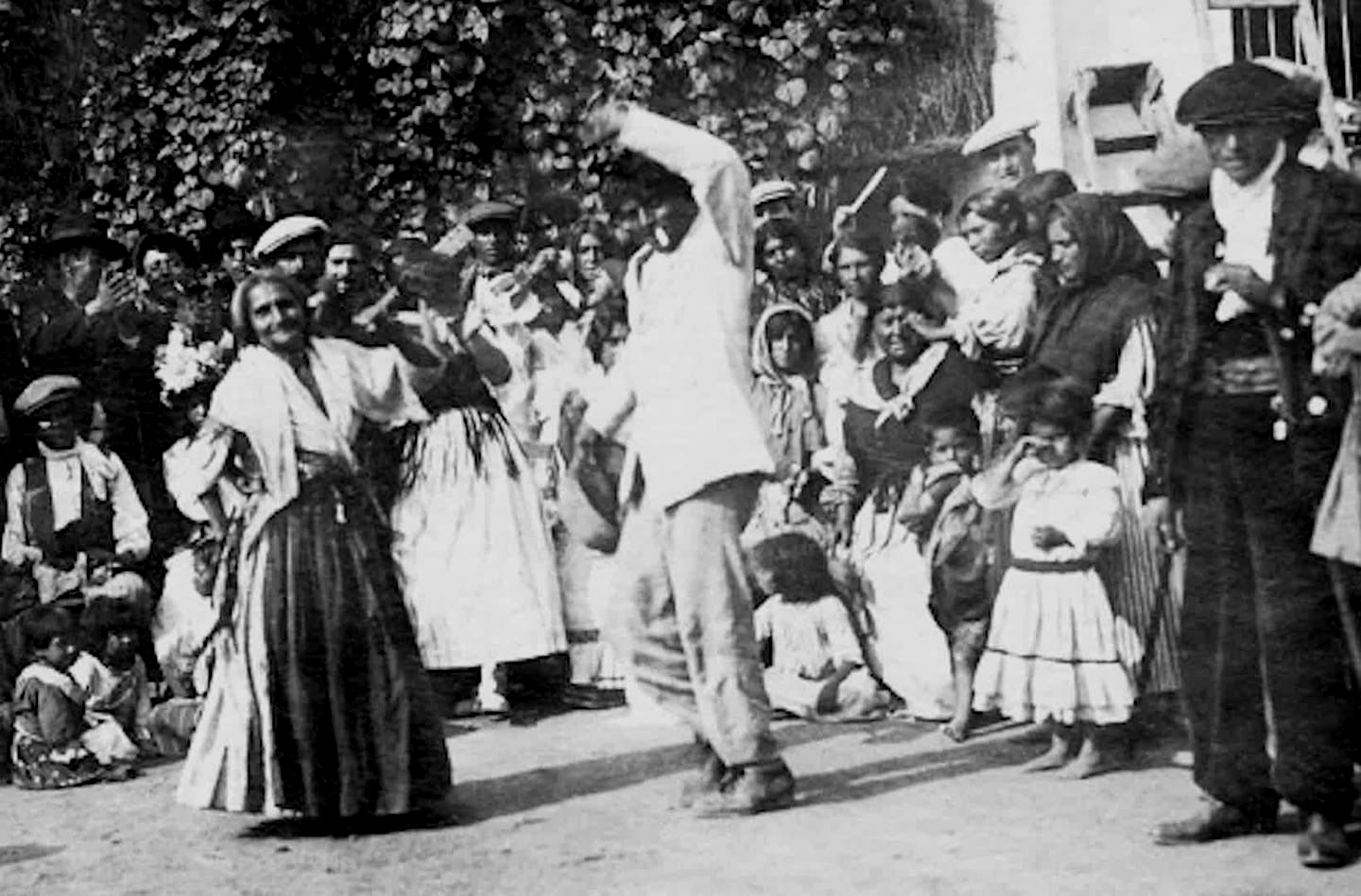
If we add to the above factors the fact that it has a settlement of gypsy population, rooted in the city for more than 500 years, we will find that it meets all the requirements to be one of the main capitals of Flamenco.
PRE-FLAMENCO
As a starting point for this story, we will go back to the year 1425, this is the first documented date of the presence of the gypsy population in the peninsula, as recorded in the Archives of the Crown of Aragon, and the city chosen for this was Barcelona.
These were times of change. The Andalusian and Sephardic cultures declined due to persecutions by the expanding Christian kingdoms. Not content with the reconquest of southern Spain, these kingdoms embarked on the adventure of crossing the Atlantic to the Indies. They encountered a new continent, which they named America, thus ushering in a new world order. Over time, a new route emerged, linking the Mediterranean, specifically Barcelona, with America, leading to a significant economic and cultural exchange.
The Romani people were responsible for preserving, for four centuries, the Andalusian, Sephardic, and African legacies, due to the coexistence of these cultures in the outskirts of cities, often in marginalized situations. This legacy, combined with the musical heritage they carried from their journey from India to our lands, the seasoning of the diverse cultural traditions of the Iberian Peninsula, and the influences of new Creole music, was secretly nurtured within Romani families. However, it wasn't until the nineteenth century, as a result of the travels through these lands by European Romantic artists, that we find the first traces of a new musical phenomenon. Fleeing from the prevailing classicism, intellectuals found a great source of inspiration in popular figures of our iconography, particularly within the Romani world and its surroundings. Thanks to many of their works, this art emerged from the private sphere, leaving the first traces of what, a few years later, would be known as Flamenco.
FLAMENCO
In the mid-19th century, as a crossroads of different cultures—Mozarabic jarchas, Greek cymbals, Gregorian chants, Castilian seguidillas and romances, Sephardic laments, African sounds, northern folklore, music from the Americas, and the orientalism of the Romani people—all blended to give rise to a new musical style that came to be called Flamenco. It is expressed primarily through song, guitar playing, and dance, encompassing different styles or palos that form the complex genealogical tree of Flamenco.
It was in 1846 that the first written record of this new musical genre appeared. Serafín Estébanez, in his novel "Escenas Andaluzas" (Andalusian Scenes), paints a portrait of Andalusian life at the time, introducing the Gypsy singers "El Planeta" and "El Fillo," explicitly stating that the musical style they performed was called flamenco, thus establishing it for posterity.
In that same year, 1846, Prosper Mérimée, author of the novel: “Carmen”, wrote a letter to the Countess of Montijo, on the occasion of one of his visits to Barcelona:
“Yesterday they came to invite me to a gathering to celebrate the birth of a Gypsy woman’s child. There were about thirty of us in a room. There were three guitars, and they were singing at the top of their lungs, in Caló and Catalan…”
We can see, from the earliest written records of flamenco, that Barcelona is fully connected to this musical frequency. Comparing the accounts of Estébanez and Mérimée, we find very similar elements: the fourth, the shout, the guitar playing. The clear differentiating factor is the language used. In Barcelona, Caló and Catalan were part of the way the singing was performed, while in Andalusia it was Castilian Spanish; Caló did not play a prominent role.
MODERNISM and FLAMENCO
Between 1888 and 1929, Barcelona hosted two International Expositions, which led to the city expanding beyond its walls. Fueled by an economic boom, thanks to the influx of capital and entrepreneurial spirit from the "Indianos" (Spaniards who had made their fortunes in the Americas), spurred by the loss of the last colonies, and coupled with a powerful industrialization process, Barcelona became an enterprising city with a rich cultural and leisure scene. The "Rose of Fire," as it was known during those years, would become the epicenter of a new cultural and social phenomenon: Modernism.
Modernism is characterized by the freedom it brings to artistic creation, prioritizing authenticity over beauty. This leads artists who follow this trend to develop a profound interest in popular music, and in particular, in Flamenco.
Bohemian life becomes one of the great myths of modernity, inspired by the idealization of bohemians, of the Gypsy people, whom the history of art has always typified as a symbol of a life without rules and without ties, free from institutional conventions.
Although the most famous Modernists are architects, the first Catalan artists to embrace this trend were Santiago Rusiñol and Ramón Casas, two Flemish artists.
Ramón Casas gained fame at the Salon des Champs-Élysées in Paris by exhibiting his "Self-Portrait Dressed as a Flamenco," which earned him an invitation to join the "Société d'artistes françaises" salon.
Of Santiago Rusiñol, it is worth highlighting his knowledge of Flamenco, which led him to participate in the cante jondo competition in Granada, with the nickname of the "Niño de Barcelona" or to organize famous flamenco parties in Sitges.
Many other artists sought inspiration in the Gypsy world and Flamenco, including:
Juli Vallmitjana, a playwright from the underbelly of society, guided Nonell and Picasso through the gypsy neighborhoods, where he learned to speak the language of underground Barcelona: Catalan caló, leaving evidence in his many works; he was undoubtedly a clear Lorca-esque precedent.
Isidre Nonell gave a face to the Roma people of Barcelona, his work being notable for its portraits of the Somorrostro neighborhood, as well as his love affairs with some Roma women. In the world of classically trained music, figures such as Isaac Albéniz, Enrique Granados, and Enric Morera stood out, incorporating elements of flamenco tradition into their compositions.
“BARRIO CHINO”, Barcelona’s flamenco quarter
It was one of the most vibrant neighborhoods in the world, where every form of entertainment, legal or otherwise, was on offer in its establishments. The neighborhood encompassed the triangle formed by the Colón Theatre, the Liceu Opera House, and the Molino Theatre, where flamenco venues were numerous, offering some of the best flamenco in the country. It was also known as District V, as Sebastián Gasch describes it in one of his chronicles:
“It is precisely in this District V where the heart-rending laments of the marvelous flamenco song relentlessly, obsessively, and insistently pursue you, and where the poignant and sorrowful echo of the trembling stages constantly reaches you, pathetically complaining as they are vigorously whipped by the burning, desperate, exasperated heels of so many dancers, subjugated and hypnotized by a dry, precise, hallucinatory rhythm. Our people are unaware that it is precisely in this district where Flamenco, without a drop of staging, manifests itself with a terrible rawness and moving pathos. Perhaps more purely than in Andalusia itself.”
SINGING CAFES
Flamenco emerged from the family sphere in the mid-nineteenth century. The first way to commercialize it was through the Café Cantante, where artists began to professionalize. Barcelona's entertainment entrepreneurs embraced this model, opening establishments primarily in the area between Plaza Palacio and the Barrio Chino (Chinatown). Some ventured to establish these businesses in other Catalan cities and throughout the rest of the country. The Café Cantante featured a foyer, where patrons mingled, offering coffee and restaurant service, always accompanied by gambling tables, known at the time as "pateras." In the private rooms, the revelry could last until the early hours of the morning.
We'll mention a few venues where flamenco was the main attraction: Cal Manquet, La Taurina, Los Cotos, Veloz, Granada en Cataluña, El Chiringuito, Ca L'Escanyo, Candelas, El Cangrejo, and Casa Juanito El Dorado. But the place that boasted the best parties was Villa Rosa, on Carrer Arc del Teatre, where the Moog techno club is now located. Run by the guitarist Borrull, the venue became a major draw for anyone visiting the city, enjoying international fame and featuring some of the best artists on its roster.
THE FIRST RECORDINGS
Coinciding with the arrival of the 20th century, a new factor contributed to the even greater presence of flamenco artists in Barcelona: the establishment of record labels where they recorded their songs. With commercial distribution, the phonograph and the gramophone brought about a major revolution in flamenco. The voices of the artists, their songs, and their different styles easily reached homes, and could be heard again and again in bars and taverns. The gramophone at El Manquet became famous for playing the recordings of the most fashionable flamenco singers.
Flamenco had a new channel for dissemination; it lost some spontaneity but gained popularity. Artists recorded their personal styles for posterity: Antonio Chacón, Manuel Vallejo, La Niña de los Peines, El Cojo de Málaga, El Gorito, Antonio Merino, Niña de Linares, Niño de Almadén, Niño de Lucena, El Pena Hijo, Pepe Pinto, Manuel Torre, Juan Varea, Corruco de Algeciras, and José Palanca all recorded in Barcelona studios. These artists took advantage of their recording sessions to perform in Barcelona venues.
FLAMENCO OPERA
The 1920s, coinciding with the First World War, saw a large influx of European bourgeois and intellectuals fleeing the war and seeking entertainment. This period was a true golden age for flamenco in Barcelona. Venues offering flamenco performances moved towards the city center, opening up around Plaça Catalunya. The most renowned was Bodega Andaluza, located in the basement of the Hotel Colón (now an Apple store), and managed by Miguel Borrull Jr. Another famous hotel, the Ritz, also featured flamenco at El Farolillo, which boasted its own flamenco troupe, directed by Rayito.
Around this time, a new form of performance emerged: Flamenco Opera. Shows were held in bullrings and theaters. The idea had nothing to do with opera and everything to do with flamenco; it was purely an economic matter, as taxes were lower. The most prominent promoters of this type of show, most of them from Barcelona, such as Carcellé, Verdines, and Montserrat (the latter an amateur flamenco singer), organized tours throughout Spain with various companies, hiring both new and established artists. Notable figures of this era included Manuel Torre, Antonio Chacón, Pepe Marchena, Manuel Vallejo, La Niña de los Peines, and Manolo Caracol.
CARMEN AMAYA
Born from the splendor of a city, at that time the capital of Flamenco, the figure of Carmen Amaya emerges, an international emblem of Flamenco dance.
She was born in 1913, her mother Micaela gave birth to her at her grandparents' house, on a stormy night, in a predominantly gypsy neighborhood: Somorrostro, on the Barcelona coast, on All Saints' Night.
“I am Catalan through and through”
She was the second of eleven siblings, of whom six survived: Paco, Carmen, Antonia, Leo, Antonio, and María, all with flamenco talent, who pursued careers alongside her. She learned to dance with the waves of the Mediterranean Sea, which lapped at her doorstep.
“Even when my mother sent me on an errand, she would teach me my dances.”
She grew up in a humble and impoverished environment, which she always remembered with pride, looking for the positive side:
“Sometimes, they shaved my head completely bald and gave me kerosene for the lice. Imagine me, dancing with my bald head and my eyes downcast like a donkey, full of sleep in them, unable to open them because of the tobacco smoke! Although what I enjoyed most was not that, but taking a piece of cardboard, climbing onto the hill and sliding down it sitting down.”
Her father, José Amaya “El Chino”, a flamenco guitarist, was the first to see that his little girl had something special. At the age of 6, she began frequenting the flamenco venues of that vibrant Barcelona, accompanied by her father in search of money to bring home: “to earn a living,” as she would say.
“When Dad and I arrived home, they were eagerly awaiting us no matter the time. We would bring freshly baked bread, rub it with tomato, and add ham.”
The Café Las Siete Puertas, in Plaza Palacio, now a restaurant, was the first place where she tried to make a living. It was the 1920s, and francs, pounds, lire, and marks were flowing freely, a result of the arrival of European bourgeois fleeing the First World War; that little girl's eyes would light up as she picked up the coins that were thrown to her on the ground after her performances.
Her father was in charge of teaching the girl everything he knew about singing and dancing.
“He’d pick up the guitar and I’d start dancing. He’d tell me: no, not that, do it again, like this, that; it’s good, or it’s bad, or you’re not in time. I figured everything out myself. Without teaching me a single dance step, he was the one who taught me. The first thing I learned was the zambra. I sang and danced. Then I started dancing soleares, the farruca. And then my father made me put on trousers and dance alegrías. Trousers are unforgiving: they show every flaw in the world and you have nothing to hold on to.”
Her aunt, Juana, La Faraona, a striking beauty and remarkable dancer, was also Carmen's early dance partner. From her family, her neighborhood, and her city, Carmen learned everything, both singing and dancing. Like a true Gypsy, she never attended a dance class—well, she did attend one, but she didn't finish it.
“My father wanted me to dance to an orchestra. Those were the bitterest days of my life, and I threw the biggest tantrums. In the end, I went to an academy on Calle Nueva (Nou de la Rambla). The teacher's name was Vicente Reyes. At the time, I was in love with a piece of music, “Los Claveles,” by Maestro Serrano. He played it for me and started teaching me the steps. After five minutes, I was already desperate. So I said to him, “Look, maestro, would you mind if, instead of doing it this way, we did it like this?” He kicked me out. That's the only experience I've ever had with a teacher.”
Another person who marked her artistic career was her relationship with the Gypsy guitarist, Agustín Castellón, originally from Navarre: Sabicas. One of the universal masters of flamenco guitar. During one of his stays in Barcelona, he discovered this girl, a pure gem who didn't even need polishing; she was spectacular. He met her at Cal Manquet.
“The flamenco atmosphere was very intense. I was completely amazed by what she could do, her hands, her feet, she won us all over. I saw her dance and it seemed truly supernatural to me, I had never seen anyone dance like her.”
Sabicas helped El Chino take Carmen to Madrid so people could see her dance. This is the account of the girl's first night at the Villa Rosa in Madrid. Sabicas introduces her at a flamenco gathering:
“Here’s a Catalan gypsy girl who’s really good and knows how to dance like you wish you knew. At the gathering is an old flamenco singer, El Peluco, who, laughing uproariously, remarks: “That Catalan girl is definitely a dud!” Carmen gets up, stands before the singer, staring at him defiantly, and bursts into dance. Her dance is full of fury and completely possessed by the spirit of flamenco. Carmen dances for him and only for him, she surrounds him, harasses him, drives him wild… El Peluco can’t stand it anymore, and overcome with emotion, shouts: “And I called her a dud! That’s dancing, girl!” The news spreads throughout Madrid; now everyone will respect her.”
Years later, they together marked milestones in the history of Flamenco, especially during Carmen Amaya's American tour. Film footage and recordings of these two giants together remain for posterity. They are credited with: the creation of the taranto dance, memorable performances—imagine Carmen Amaya dancing and Sabicas on guitar—and love affairs.
She captivates everyone who sees her dance; her charisma and strength leave no one indifferent. Even as a young girl, she was nicknamed "The Captain," and nothing could stop her, conquering stages in Barcelona, Paris, and throughout Spain, all while still a young woman.
The first venues she frequented were those close to home, but she soon immersed herself in Barcelona's nightlife, performing in every place that needed flamenco artists, from Somorrostro to Paral·lel. But the Barrio Chino (Chinatown) was her other vital school; there, from childhood, she rubbed shoulders with the artistic elite, flamenco and others, who frequented Barcelona's nights; and there, at the Taurina, the critic Sebastián Gasch immortalized her.
“She barely reached a meter off the ground. Seated on a chair on the stage, La Capitana remained impassive and statuesque, haughty and noble, with an indescribable racial nobility, hermetic, oblivious to everything happening around her. Suddenly, a leap. And the gypsy girl danced. The indescribable. Soul. Pure soul. Feeling made flesh. The stage vibrated with unheard-of brutality and incredible precision.”
Carmen left us a record of these early professional experiences:
“I worked at El Manquet house; there was a large dance troupe: Micaela, El Gato, El Farruquero, Tobalo, Lolilla la Cabezona, my aunt La Faraona, El Bulerías, and my father. El Gato was physically extraordinary. There has never been a woman with a waist like that. There has never been a man like him. El Farruquero was the best there ever was.”
“When the police weren’t around, they let me dance at Villa Rosa, imagine, I was just a kid. Everyone gave me loads of money. There came a point when Miguel Borrull, who owned the café, saw that I was taking all the money from the parties, and he’d shout at us when we arrived: ‘Go away, go away, Chino, the police are here!’ It was a lie. But we had to leave after waiting, many nights in the freezing cold.”
She made the leap to the big stage at the Teatro Español in Barcelona, with the company of the Jerez-born flamenco singer José Cepero. She traveled to Paris in the show of the fashionable cuplé singer Raquel Meller, accompanied by her aunt, La Faraona, and her cousin, María, with whom she had formed the Trio Amaya.
Her fame grows daily, and she joins the company of the fashionable flamenco singer, Manuel Vallejo, with whom she performs for the Andalusian public, who are completely captivated by her. In Seville, La Malena and La Macarrona are enthralled by the dancing of this prodigy of their own kind: "She's unique!" they exclaim, possessed, upon seeing her perform.
“My real triumph came when I arrived in Madrid, at a tribute to the Gypsy flamenco dancer Custodia Romero. They told Custodia, ‘We’ve brought a little Gypsy girl to dance.’ She replied, ‘Great, put her wherever you like, it doesn’t matter.’ And then, imagine, I go out to dance my fandanguillo, and everyone’s on their feet. They make me repeat the soleá, the alegrías. I caused quite a scene! The woman being honored came out to see me, absolutely furious, shouting, ‘You could have warned me that this girl danced like that!’ She was supposed to dance behind me, with the crowd I’d created.”
Her success in singing and dancing would be accompanied by her move to the big screen. She had already made some forays into acting, in supporting roles, in a few films. But her definitive leap to the big screen would come with the films: “La hija de Juan Simón” (Juan Simón's Daughter), where Luis Buñuel included her in the cast, and “María de la O,” a film based on the copla of the same name, composed by Valverde, León, and Quiroga; this film enjoyed unprecedented box office success, making Carmen Amaya a household name.
The civil war caught her on tour in Valladolid. She decided to leave the country for Portugal, where she waited for the rest of her family, so that once together they could embark on the adventure of crossing the Atlantic from Lisbon.
She disembarked from the ship Monte Pascoal on December 9, 1936, in the Argentine capital. Three days later, on the 12th, she performed at the Teatro Maravillas in Buenos Aires, where she remained for over a year, playing to unprecedented crowds night after night. Her success led her to conquer the rest of Argentina. The same thing happened in the rest of Latin America, and the public reaction was equally overwhelming. This was reported in all the major newspapers of the cities she visited, while she also participated in films and official events. Was Carmen Amaya, perhaps, the first Latin star in the world of entertainment?
The United States was all that was missing. Summoned by the businessman Samuel Hurok, Carmen and her entourage of 25 people disembarked at Ellis Island, the gateway to New York, in 1941. They couldn't read or write, nor of course a word of English, but they laughed at the moon, as was their custom: they had contracts, and lots of money, and they would have even more after their month-long stay at the Beach Comber Cabaret on Broadway, and those three television appearances for which they were going to be paid $15,000.
That same year, she performed at Carnegie Hall, accompanied by Sabicas' guitar, the dancer Antonio Triana, and her entire family. Among the witnesses were the dancers La Argentinita and her sister Pilar López, the latter recalling: “For me, Carmen Amaya was and always will be unique. Her way of dancing was exemplary and completely unprecedented.”
Following her historic performance at Carnegie Hall on January 13, 1942, President Roosevelt invited her to dance at the White House. This would be the first time Carmen and her company had ever been on an airplane; the flight was from New York to Washington. You can imagine the moments that unfolded aboard that plane. Roosevelt was captivated and gifted her a bolero inlaid with gold and diamonds, which she cut into 30 pieces, one for each member of her company.
In their first performances in New York, the leading figures of the art world could be seen in the front rows; these were their reactions:
Charles Chaplin: “You ask me why I like Carmen Amaya’s dancing so much? Go and see her! She is a volcano illuminated by superb flashes of Spanish music.”
Greta Garbo: “Carmen Amaya is art”
Fred Astaire: “Much to see, much to admire, but even more to learn”
Arturo Toscanini: “Never in my life have I seen a dancer with so much fire and rhythm, and with such a wonderful personality”
Orson Welles: “She is the most artistic of dancers and the most brilliant of artists.”
Orson Welles hired her that same day for his next film, offering her three times more for a single dance than he paid the film's star, Marlene Dietrich. As she conquered Hollywood, the best directors of the time wanted to cast her in their films.
Touring with his company through the best American venues, the highlight will be filling the Hollywood Bowl in Los Angeles for two nights in a row; Frank Sinatra had enough with just one.
In America, she also recorded several albums, mostly with Sabicas' guitar, which show that she was also a great singer.
In 1946, El Chino died in Buenos Aires. Carmen lost a father figure, but she also lost the person who had passed on everything he knew to her and had been with her since the beginning of her artistic career. Nothing would ever be the same; the family began to fall apart.
She didn't return to Barcelona until 1947, and she conquered it, as well as the rest of the country, Europe, and the world. She surrounded herself with royalty and rogues, artists from all walks of life, and her family, who were always by her side, always with a natural authenticity that she never lost. A staunch defender of her beloved Barcelona, she always carried it like a banner. She made a significant contribution to the history of Catalan Rumba. Throughout the Latin American countries she visited, she adapted the songs she liked into a rumba style, as evidenced by recorded recordings. She didn't dare explore Anglo-Saxon music because she never wanted to learn English. She learned to sign her name in Cuba, just so she could enter the USA; life taught her everything. She was the driving force behind ending shows to rumba, a trend that became fashionable in most flamenco performances of the time.
Here is your fountain. Carmen Amaya was thrilled with the fountain that Barcelona dedicated to her, in her native neighborhood of Somorrostro. That's why, in 1959, she didn't hesitate to break her contract in Paris, pay the corresponding fine, and travel with her entire company to her city to attend the inauguration.
Here she got married, on the Ramblas, to the guitarist of her company, José Agüero, in the chapel of Santa Mónica, in 1952.
And here, she filmed her posthumous work, the movie "Los Tarantos," directed by Rovira Beleta. In the film, she has a sublime role, demonstrating her Gypsy heritage and her charismatic acting skills, leaving behind masterful scenes of song and dance for posterity. The film was shot in everyday locations around the city in 1962: Somorrostro, the red-light district, the Born Market, Montjuïc, Plaza España, Las Ramblas—places Carmen knew very well. The cast included artists such as El Chocolate, La Singla, Antonio Gades, Peret, Sara Lezana, El Chacho, Andrés Batista, Pucherete, and several Barcelona Gypsies who participated as extras or in supporting roles.
During those years, Carmen Amaya followed a suicidal diet of four packs of Marlboro cigarettes, accompanied by 14 coffees a day. When she returned to Barcelona to film "Los Tarantos," after traveling halfway around the world, her kidneys were destroyed. All the doctors advised her to have complete rest. The queen replied: "If I don't dance, I'll die." Severe kidney failure prevented her from eliminating the toxins that would eventually poison her entire body, but dancing, while exhausting her, also helped her eliminate them through sweat. When dancing ceased, she would be at the mercy of the disease.
She will give one last, almost ghostly, charity performance on August 24th in Bagur. In the autumn, news of her dying begins to spread; hundreds of Roma from around the world arrive on pilgrimage and camp around her farmhouse to accompany her on her final journey, along with journalists from all over the globe.
He never saw the finished film. He died in 1963, on the shores of his beloved sea, the Mediterranean, in the town of Begur, on November 19th. That night, Antonio Gades went to every flamenco venue in Barcelona with the tragic news; that night, flamenco Barcelona went dark, it had lost a star that illuminated it.
The world of Flamenco and its Barcelona are aware of her.
FLAMENCO AFTER THE CIVIL WAR
Despite the hardships endured in the post-war period, the city maintained its flamenco scene, though things were never quite the same. Those who kept this tradition alive were the refugees from World War II and the American troops who visited the city seeking entertainment. With them came the fashionable American music of the time, which was played in the venues they frequented, inspiring local musicians. Among the sailors, flamenco was a major draw; they frequented flamenco venues in search of revelry and fun. It wasn't until after the end of World War II that the city began a slow economic recovery and a gradual influx of immigrants from the rest of the country.
Flamenco Jazz
The HOT CLUB of Barcelona was a pioneering Jazz club in Europe, founded in 1935, with performances by the gypsy guitarist: Django Reinhardt, father of Manouche Jazz; it resumed its programming after the civil war.
In 1955, Lionel Hampton performed with his band, where he met pianist Tete Montoliu. After a 48-hour revelry at a flamenco tablao, Hampton conceived the idea of combining flamenco with jazz. He quickly grasped the similarities in rhythm, color, feeling, and emotion between these two musical genres. This led to the first recording, titled "Jazz Flamenco," featuring Tete Montoliu.
Barcelona has continued to cultivate Jazz, producing musicians who have collaborated on high-profile flamenco projects, such as Carles Benavent, Jordi Bonell, Amargos or Raynald Colom.
Catalan Rumba:
The Catalan Roma, settled in the neighborhoods of Gràcia, Carrer de la Cera, and Plaça Espanya, are the only ones who maintained Catalan as a defining characteristic after the war. These families have spread their reach to other Catalan provincial capitals and towns such as Mataró, Figueres, Vilanova i la Geltrú, and Perpignan, as well as various towns in France, where the Catalan language is known as "Gypsy."
They were the protagonists of the Rumba, making it their family soundtrack, giving it a clear international projection and spectacular sales success in the sixties and seventies.
As a result of the travels of members of these families to America, driven by the post-war crisis, the last of the "cante de ida y vuelta" (song of return) in Flamenco emerged: the Catalan Rumba. Caribbean sounds, in particular, were reinterpreted in a flamenco style: guitars, handclaps, and bongos, brought to life by Catalan Gypsies, resulting in a huge commercial success.
In flamenco, the songs of the Americas (cantes de ida y vuelta) are considered to be those that arose from the relationship between flamenco and the new genres that emerged around Creole music. Many people attribute the African influence, which undoubtedly has its full magnitude and relevance, to the contact of flamenco artists with Afro-Caribbean music in the Antilles. We must not forget that there were African communities on the Iberian Peninsula before the establishment of the American order, meaning that the African influence on our music dates back to ancient times. Afro-Spanish communities were the first to settle in ports such as Cartagena de Indias, Havana, and Port of Spain. Known as "negros curros" in the Antilles, they arrived with their songs, guitars, and guasería (a type of folk song), shaping the collective imagination of much of what are now Afro-Latin traditions. We must also not forget that the presence of the Romani population overseas has been constant since the first voyages to the Americas. During the period of repression against the Roma people, dictated by the rulers at certain stages of our history, one of the punishments was the galleys: rowing across the Atlantic on state ships, and if you arrived alive, you would gain your freedom. Few wanted to return. This is the origin of the galley songs, popularized by El Lebrijano. As we can see, the origins of most Creole music already had a clear Roma and Iberian component.
ANTONIO GONZALEZ: THE FISH
One of the key figures in understanding this genre was Antonio González Batista (Barcelona, 1926 - Madrid, 1999). He was known artistically as EL PESCADILLA and among his family, in his neighborhood of Gracia, as L'Onclu Aito.
He adopted the stage name of his father, who was also known as El Pescadilla, a flamenco guitarist raised in Barceloneta, where he combined selling fish with playing flamenco. He married Antonia Batista, a resident of Fraternidad Street, in 1920, and they settled in the Gràcia neighborhood, where their six children were born: Manuel, Baldomero (Onclu Mero), Antonio (El Pescadilla), Juan (Onclu Polla), and Josefa.
From a young age, Antonio displayed an innate talent and virtuosity as a guitarist. Even as a child, he would often earn a living with his father and brothers, playing at parties and flamenco venues in the city center, where he honed his skills as a flamenco guitarist. The bodega on Escudellers Street, known as El Charco de la Pava, decorated with bullfighting motifs, featured flamenco performances. It was one of the places where El Pescadilla and his family starred on many of those nights and one of the settings where rumba began to be introduced to the public. It was located on a street that, at that time, the late 1940s and 1950s, was buzzing with flamenco activity, alongside venues that played music arriving from the Americas, particularly Latin music. These venues attracted a clientele with dollars, eager to hear these songs in a flamenco style: American troops and the first tourists.
The Caribbean breezes began to blow strongly over the guitars, accompanied by the rhythmic foundation of flamenco handclaps and the gypsy dance, hip swaying and swagger. The guitar would have to take on all the music of a Latin orchestra, for which they resorted to what was called: The Fan.
“That ingenious trick
and easy to implement
that comes together on the guitar
harmony and percussion.”
Years later, the queen of what was called Salsa, Celia Cruz, declared: "El Pescadilla, with his guitar, is capable of interpreting everything that a Cuban orchestra does."
The González brothers formed musical groups like Brisas and Los Ponchos, where they performed Latin American repertoire with a flamenco twist. Rumba was brewing.
El Pescadilla continued to hone his guitar skills and was sought after by the leading flamenco singers, performing throughout Spain. He left a recording that showcased his exceptional talent as a flamenco guitarist. He accompanied and recorded with Rafael Farina, a popular flamenco singer at the time. Soon after, Manolo Caracol invited him to join his company, performing all over Spain. Manolo Caracol was enjoying immense popularity at the time, forming a renowned partnership with Lola Flores in her Zambra shows. This would be a pivotal moment in the history of flamenco: Lola Flores discovered a new sound, a new kind of music, and a heartthrob in El Pescadilla. Lola Flores cherished him and would never forget him.
Antonio married in Barcelona, according to Gypsy tradition, the flamenco dancer Dolores Amaya Moreno, cousin of Carmen Amaya and La Chunga, with whom he had a daughter, Antonia (Toñi), in 1955. His daughter Toñi lives in Madrid, she is a flamenco dancer.
Lola Flores traveled to Cuba. Even today, the parties held in Havana to celebrate her visit are still talked about. Lola experienced Cuban music firsthand, guided by the best Caribbean artists, who admired and revered her. This tropical sound reminded her of Barcelona and the music of El Pescadilla. She didn't stop until she married him, and together they transformed her artistic career.
In 1957, El Pescadilla and Lola Flores married far from Barcelona, so that her family, whom she had left in Gracia, wouldn't spoil the celebration. Their children were Lolita, Antonio, and Rosario.
El Pescadilla, in his limited recordings for the Belter label, was able to capture gems of Brazilian, North American, and Caribbean music: "Sarandonga," "Cada vez que tú me miras," "Levántate," "Strangers in the Night," "A Garota de Ipanema," and "Sabor a mí," giving them a personal and modern interpretation with a clear flamenco influence. He was one of the forerunners of an urban sound, which his wife Lola Flores adopted into her repertoire, creating one of the most explosive duos on the scene of the late 1950s and 60s. They toured Spain and the Americas together and appeared in films with great commercial success. People say that Antonio was overshadowed by the power and popularity of Lola Flores; something that Lola and all those who knew him didn't quite grasp. The house artist was El Pescadilla.
After their marriage, they settled in Madrid, where Antonio ran a tablao: El Caripen, the cradle of the most authentic flamenco. He was an artist's artist; everyone was captivated by his personality. The leading figures in flamenco admired his singing and sought him out; he was a beacon of light in the Madrid flamenco scene of the 1960s. He was also a source of inspiration for the younger members of flamenco dynasties, such as the Sordera and Habichuela families, based in the capital, who years later would form fusion groups like Ketama and La Barbería del Sur. Antonio Flores, the couple's son, was one of the leaders of this new movement, taking up his father's mantle and developing a personal and unmistakable musical style. Lolita and Rosario are two outstanding artists on the current music scene.
El Pescadilla died of grief after the death of his wife and his son, Antonio, in 1999.
FAMILY
Peret brought Rumba to its most commercial peak, possessing a unique talent for creating his songs and enjoying great popularity. Pedro Pubill Calaf was born in Mataró on March 26, 1935, and moved years later to the Portal neighborhood of Barcelona. He began his artistic career as a flamenco guitarist before developing his career as a rumba singer. Among his most outstanding songs are "La noche del Hawaino," "Una lágrima," "Es preferible," "Saboreando," and "Borriquito," among many other commercial hits. He also worked in many films, notably his participation in the film "Los Tarantos," where he sang a garrotín for Carmen Amaya and La Singla, marking his first film appearance. He participated in numerous television programs and was the first Romani artist to represent Spain at Eurovision, with the song "Canta y se feliz." Another important moment in his career, after his evangelical retreat, consisted of getting everyone dancing at the closing of the 1992 Olympic Games, singing his rumba to that enchanting gypsy woman: "Barcelona has power."
He died on August 27, 2014, defending his reign over rumba until his body gave out. He never liked it being called rumbeta, just as flamenco artists dislike the diminutive, flamenquito—words are superfluous! As he sang, let no one send him flowers, but rather mint, which gladdens the heart.
THE GUY
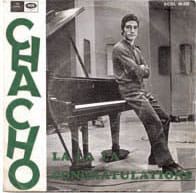
José María Valentí, born in 1940, grew up in an environment conducive to art: the Calle de la Cera and its surroundings, where many singers and artists lived, near the Paralelo, with its nightclubs and theaters. From a very young age he showed a predisposition for music; his mother enrolled him in the Liceu music school at the age of ten, where he trained as a pianist.
He stood out in the rumba scene for accompanying himself on the piano, which defined not only his style but also his image, characterized by his gallantry. In his early days, he played piano at weddings and family parties in iconic venues such as Sala Apolo and La Paloma.
In his early artistic career, he played alongside Peret, accompanying La Camboria, with Peret on guitar and Chacho singing. Fame came to him in 1965 when he recorded for the EMI-Regal label. He recorded albums between 1965 and 1977, but continued performing live until 1994, when he decided to retire. He returned to performing in 2008, but without the recognition he deserved.
THE AMAYA
Duo formed by the brothers Pepe, La Coruña, 1952, and Delfín Amaya, Oviedo, 1954, in the late 1960s in Barcelona.
The family of flamenco dancer Carmen Amaya played guitar and sang at Gypsy parties from a young age. They took their first steps in show business under the guidance of Carmen Amaya's guitarist, Andrés Batista. In 1969, they made their recording debut with songs such as: "El bueno, el feo y el malo" (The Good, the Bad and the Ugly); "Zapatero remendón" (Cobbler); "Pena, tristeza y dolor" (Sorrow, Sadness and Pain); and "Bailadores" (Dancers).
They rose to fame in 1971 with their hit song "Caramelos." In 1978, under the production of Tony Ronald, they developed their career, adapting more to mid-tempo songs and ballads, until recording their most commercially successful track: "Vete." They were unable to maintain that level of brilliance for much longer; they continued recording and performing, but without the quality or impact they had previously enjoyed. Their performance at the closing ceremony of the 1992 Barcelona Olympic Games, alongside Peret, is a notable example.
OTHER CATALAN RUMBA ARTISTS
Then came Moncho, El Noi, La Terremoto, Ramonet, Chango, Salsa Gitana, Estrellas de Gracia, Sisqueto, Chipen, Papawa, Sabor de Gracia, Pedrito y Kiki, Som com som, Arrels de Gracia, La Yumiband, Los Sobrinos, and Rambo y su Timba. Today, Rumba remains deeply rooted in these communities, enjoying popularity and boasting new generations of rumba artists.
We mustn't forget the work done by Gato Pérez in reviving the genre at a time when it had fallen into oblivion. A musician of Argentinian origin, he arrived in the city as a teenager, where he discovered that Rumba is a genuine urban sound of Barcelona.
The rumba we know
It is not from China or Japan.
Our Barcelona rumba
He lives in a whirlwind of traveling the world.
The rumba is born in the street
daughter of Cuba and a gypsy
and his sister who is from Havana
It's a swing among sailors
(Gato Pérez, Rumba de Barcelona)
Flamenco clubs
The massive Andalusian immigration in the middle decades of the 20th century gave rise to and meaning to the flamenco clubs in urban Catalonia, particularly Barcelona, which since the 19th century was, and continues to be, one of the main centers in the creation and dissemination of flamenco.
The peñas as centers of solidarity typical of popular media, linked in the transition with neighborhood and trade union movements, and a scene of “nostalgias” also conducive to ideologization and institutional political intervention.
The flamenco clubs as a reason for the so-called “integration” and, at the same time, the object of marginalization or concealment, media and institutional, except when the emergence of young artists could make one dream of the “Catalanization” of flamenco.
The flamenco club boom began after the approval of the 1964 Law of Non-Political Associations. As a result of the economic improvements of the 1960s, workers from all over the Iberian Peninsula arrived in Barcelona, marking a period of recovery for the city's flamenco scene. The city center lost its dominance, and flamenco emerged in the city's outskirts. New neighborhoods arose: St. Roc, La Mina, Nou Barris, Hospitalet, and others, while others like Somorrostro and Can Valero disappeared; the Barrio Chino (Chinatown) entered a period of significant decline. The need for flamenco in these neighborhoods gave rise to a new stage: the flamenco clubs, which became venues for the best of the local scene. They contributed to disseminating and developing talent, particularly for singers, in the city. Many adopted the names of prominent singers of the time, such as the Antonio Mairena club, inaugurated in 1968 in the La Florida neighborhood of Hospitalet, which continues its excellent work today. The most notable singers, children of this stage of the peñas, will be Juan de la Vara, Chiqui de la Línea, Duquende, Blas Córdoba, Mayte Martin or Miguel Poveda.
THE TABLAOS
Since the 1960s, Tablaos Flamencos have been an integral part of Spain's most important flamenco tradition, replacing the former Café Cantantes. These intimate and welcoming venues are where the soul of flamenco reigns supreme. Known as "flamenco temples," they are places where the essence of a flamenco celebration is brought to life on stage; the artists' inspiration and ability to connect with the audience are paramount. A primal magic, the duende, is the sole objective, to transmit to the spectator the anthropological truth of flamenco. Tablaos have been the spaces where, outside the family sphere, flamenco has continued to be passed down in its purest form, without microphones or grand stages, where the close connection with the audience allows them to feel immersed in the ceremony. They have served as a platform for artists to transmit this living legacy to one another, becoming the only flamenco school outside the family setting.
Flamenco dancers in Barcelona in the 60s/70s
This will be the time to take up the mantle left by Carmen Amaya in dance, highlighting the dancers: La Singla, La Chunga or La Chana.
THE SINGLE
Antonia Singla Contreras, known as La Singla, is a Gypsy flamenco dancer born in 1948 in the Somorrostro neighborhood of Barcelona. Her grandparents were French Gypsies from Roussillon and Perpignan. A few days after her birth, due to meningitis, the baby became deaf and mute. Her mother, Rosa, who was also raising her 17 other children, decided to fight for her daughter and, after taking her to countless medical appointments, she began to speak at the age of eight, albeit with great difficulty, much to the surprise of the residents of Somorrostro, who knew her by the nickname "La Múa" (The Mute). Antoñita (little Antonia) grasped the notes of the guitar through vibrations and words by lip-reading. The truth is that La Singla began to dance by watching her mother clap her hands, thus assimilating the rhythm and transforming it into a particularly striking and emotionally charged dance.
La Singla began dancing in Barcelona taverns at the young age of 12. In 1960, she launched her professional career to its peak by participating in the Festival Flamenco Gitano project, which also featured personalities such as Paco de Lucía and Camarón, touring Europe and America.
In 1963 she participated as an actress and dancer in the film Los Tarantos, in the character of 'Sole', where she met Carmen Amaya, with whom she was compared as her successor.
Another important milestone in La Singla's career was her contract with Los Califas, a flamenco club in Madrid, during 1965. She had the blessing of Salvador Dalí and the support of Vicente Escudero, who said she was the image of the brilliant Carmen Amaya.
Although his professional career was short, it is undeniable that it was undoubtedly impressive considering his background and circumstances.
THE CHUNGA
Micaela Flores Amaya was born in Marseille in 1938 and was related to the flamenco dancer Carmen Amaya. At the age of one, she moved to Barcelona, and by the age of six, she was dancing barefoot in bars, where she was discovered by the painter Paco Rebés. He guided her artistic career and introduced her to the Cabaret El Emporium, where she became a popular figure among a group of Catalan intellectuals. The name "La Chunga" began appearing in all the Catalan newspapers, supported by several intellectuals of the time.
In 1953, the artist made the leap to the capital, where the first flamenco venues were at their peak, performing at El Corral de la Morería and from there to the United States. She performed in Las Vegas and on various television programs, captivating American audiences, who were "smitten by her bare feet." In Madrid, she met Ava Gardner, the fashionable American actress of the Madrid nightlife scene, and thanks to her, she appeared in two Hollywood films.
During the sixties, he toured the Costa Brava, performing in various flamenco venues in the area. At Los Claveles in Calella, he worked for the new summer craze: tourists, alongside the rumba singer Peret.
La Chunga became an inspiration to writers such as Blas de Otero, Rafael Alberti, José Manuel Caballero Bonald, and León Felipe. She also inspired painters like Picasso, Dalí, and Paco Rebés, the latter of whom met her as a child and catapulted her to fame as a captivating figure among intellectuals. It was Rebés who encouraged her to paint and exhibited her naive-style works in cities like Paris and Madrid. The power that La Chunga conveyed through her dance captivated the painter Salvador Dalí, who commissioned her to create a unique work. On a canvas laid out on the floor, upon which he arranged various paints, La Chunga danced barefoot, spreading the color and thus creating a new art form: painting with her feet.
She was hired for the opening of the Tablao El Cordobés in Barcelona in the early 1970s. She participated in numerous world tours and appeared in several films, including "La cogida y la muerte" (The Goring and the Death). She married film director José Luis Gonzalvo, with whom she had three children: Curro, Luis, and Pilar.
LA CHANA
A self-taught flamenco dancer, Antonia Santiago Amador was born in the Hospital Clínic of Barcelona on December 24, 1946, and grew up on Juventud Street in Hospitalet. She was a child of the post-war era, and the memory of that time has never faded.
“The slices of bread and dark wine with sugar that my grandmother gave me to stave off hunger while we waited for my mother.” From a very young age, she felt something coursing through her veins; she discovered that flamenco was her soul and her life. All by herself, with a radio, she would listen and memorize the rhythm, the beats, and then she would start to dance.
“Life was hard back then, and people had dreams, mine was to dance.”
The beginnings were not easy. Her father didn't want to let a woman leave the house to dance "because he said that female artists were bad." Her uncle El Chano, a guitarist, was the one who helped her in her artistic beginnings, without the family's consent.
In 1961, she began dancing in nightclubs on the Costa Brava. Her dancing was, from the start, improvised; her only weapons were her footwork and reaction time. She never rehearsed, only training her speed and strength so that when she stepped onto the stage, her body would obey her mind; her mastery of rhythm was absolute.
She became a mother at 18, with the first man who said he loved her. At first, everything seemed perfect, until anger, beatings, and jealousy arrived. She found happiness only in dancing, until she finally left her husband.
At Los Tarantos, in Plaza Real, where she was employed, she was discovered by the British actor Peter Sellers, who closed the theater to record her and include her in the film: The Bobo, by Robert Parrisch, in 1967. The actor proposed that she develop her artistic career in Hollywood, which would not have the family's consent.
In 1968, Manolo Caracol ran his flamenco club, Los Canasteros, in Madrid. Caracol was initially reluctant to hire her because she was blonde and from Barcelona, saying, and I quote, "No way, not from Barcelona and blonde!" After seeing her dance, he hired her immediately and exclaimed, "Long live Catalonia!" During those years, she performed throughout Europe and Australia, where she won first prize at the Perth International Dance Competition.
In the 1970s, with the rise of television, she reached the height of her popularity. José María Íñigo introduced her on his top-rated program, "Esta noche fiesta" (Tonight's a Party), which brought her national recognition. She premiered the show "Flamenco 73" at the Teatro Arniches and performed at the Florida Park and the Music Hall Xairo during her time in Madrid. In 1978, at the peak of her professional career, she decided to insure her feet with the French National Insurance Company.
She stopped dancing completely for five years; again, her husband forbade her from performing. At 39, she returned to the stage with the company of dancer Luisillo, encouraged by promoters and artists. She worked for four years for the Flamenco Summit directed by Paco Sánchez, alongside Antonio Canales, Cristóbal Reyes, Juana Amaya, El Veneno, and Los Losada. She toured the world with great success.
She married Félix Comas, a resident of Premiá de Mar, in 1990. That same year, she performed at the Joyce Theater in New York, receiving very good reviews from the press.
At 45, she began her retirement from the stage, but continues to perform sporadically. She performed at the seventeenth edition of the Ciutat Vella Flamenco Festival and at the 2016 Seville Flamenco Biennial, participating as a guest artist in the show of the dancer Rocío Molina. Rocío Molina herself made these effusive statements:
“Now I will speak of my Goddess, my inspiration… she has her God for whom she lives, dances, and loves, but she doesn’t know that for me, she is my Goddess. I adore you, Chana! And I can’t explain it, but I want to be like your dancing. Thank you is not enough to say. Both I, and the audience and artists who had the honor of seeing you, were blown away by your artistry! We flamenco artists must never forget this great dancer. Chana, when I grow up, I want to be like you…”
La Chana still dances, now seated in a chair. One of the few things that still brings her joy is flamenco, but as she says, "only the natural kind. The kind of flamenco from people like the Farruco family or Antonio Canales," whom she considers colleagues, a family that appreciates her for what she was: one of the best flamenco dancers in history.
The New Flamenco
“La leyenda del tiempo” (The Legend of Time), Camarón's first recording without Paco de Lucía, was released in 1979. It was the first work by a flamenco singer with a clear sense of innovation, introducing previously uncommon instruments such as drums, bass, electric guitars, keyboards, and wind instruments.
A few years before this milestone, the Musica Laietana movement emerged around the Zeleste venue in Barcelona, fusing jazz and rock with Mediterranean influences such as salsa, rumba, and flamenco. It would have a clear influence on Spanish fusion music, and many of its key figures, such as Carles Benavent and Joan Albert Amargós, would later collaborate with artists like Camarón and Paco de Lucía.
But Camarón de la Isla was not the only one: Paco de Lucía, Enrique Morente, Agujetas or Lole Manuel, among many others, began to look for new sounds in the flamenco universe, creating works that opened the genre to new audiences, giving it greater commercial appeal.
Although La Leyenda del Tiempo wasn't a commercial success, it did inspire new generations who decided to follow in its footsteps. From the 1980s onwards, thanks to the work of the record label Nuevos Medios, a new movement emerged: Nuevo Flamenco (New Flamenco), where artists like Pata Negra, Antonio Flores, Ketama, Miguel Poveda, La Barbería del Sur, Diego Carrasco, Mayte Martín, Jorge Pardo, Tomasito, Carles Benavent, Ray Heredia, and Duquende would become ambassadors of this modern style.
FLAMENCO BARCELONA: 21ST CENTURY
Flamenco in Barcelona continues to thrive, with new generations of talented artists who excel in singing, guitar playing, and dancing, and who are faithful to the tradition. Times have changed, and since the 1992 Olympic Games, Barcelona has become a major tourist attraction, with visitor numbers increasing year after year.
Barcelona continues to contribute its own unique stamp to the flamenco scene, with diverse profiles. Some remain faithful to tradition, to an ancestral fire that keeps this great art alive, particularly among the new generations of Roma. Others find in flamenco their means of expression and take it down personal paths, without being slaves to tradition. Barcelona lives on.